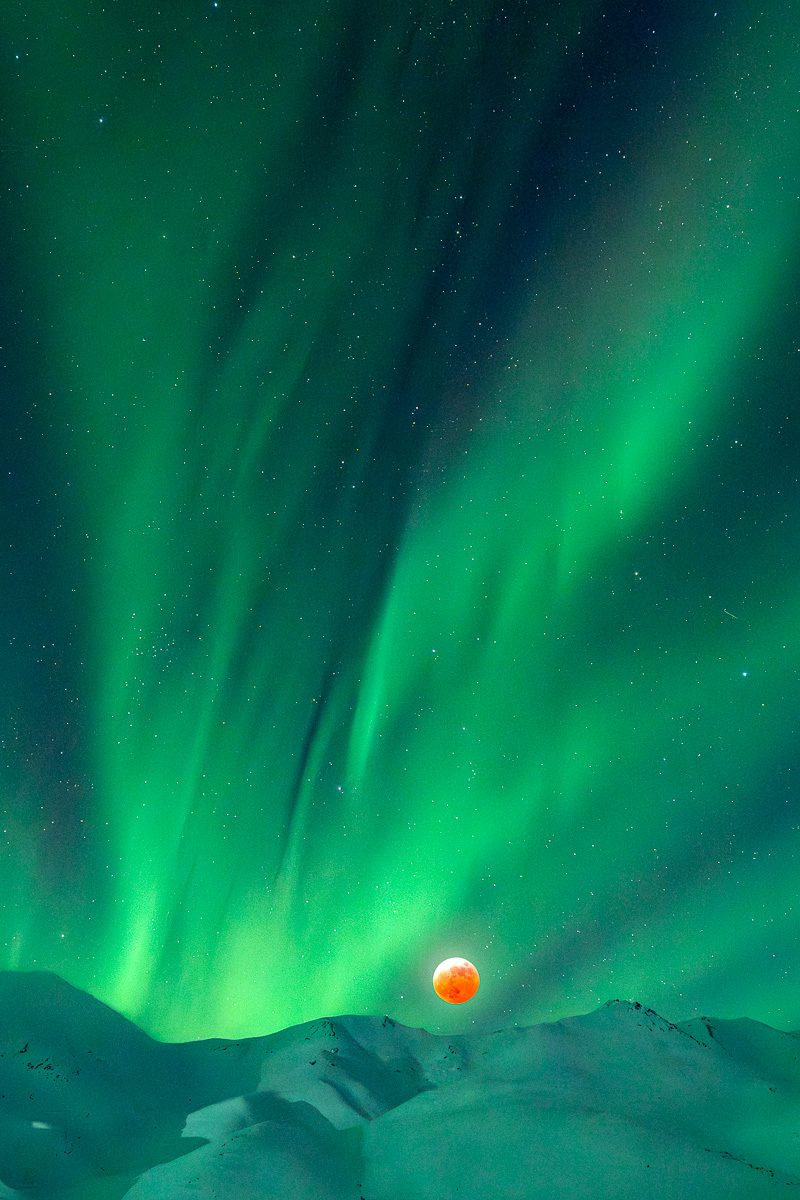
Aurora Borealis Under the Solar Maximum
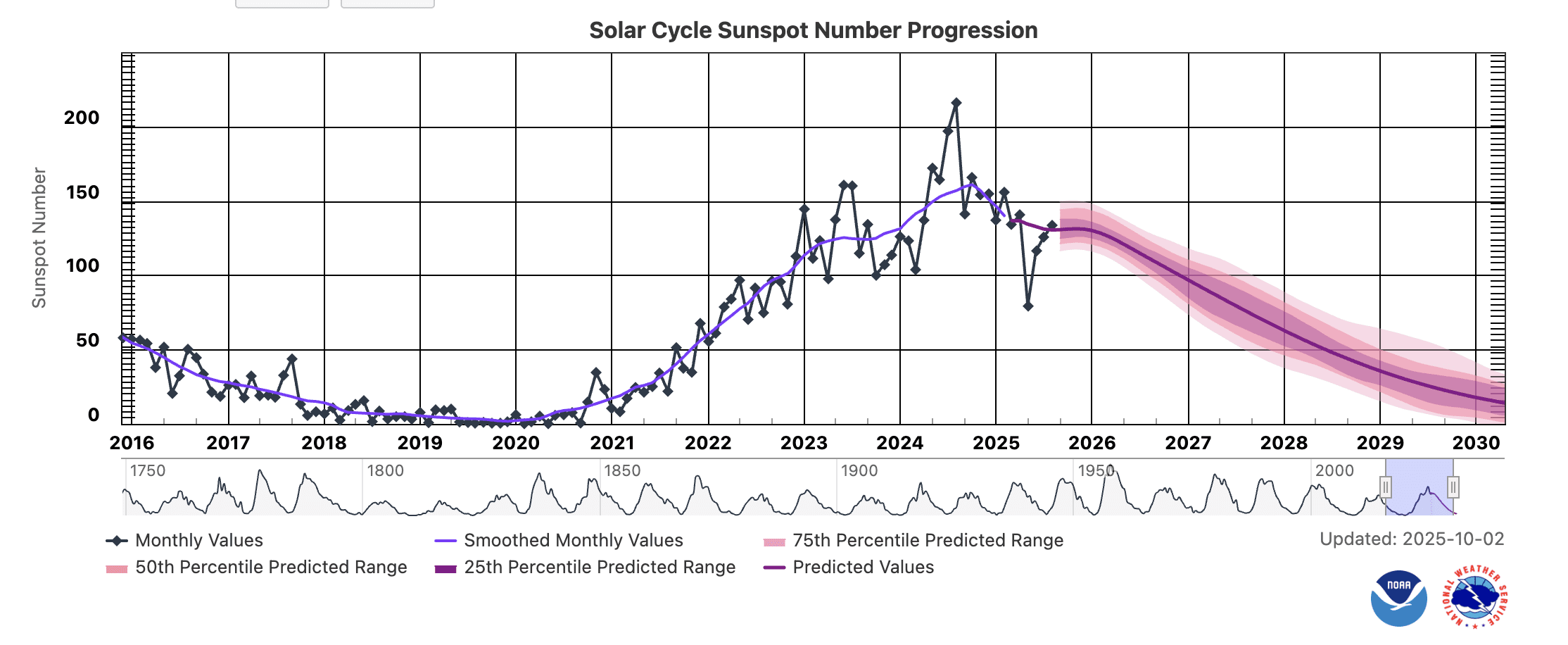
As autumn settles in and nights grow long, aurora season begins in Alaska. This year is especially exciting because we are still at the height of the solar cycle—a time when the Sun is most active, showering Earth with bursts of charged particles that fuel breathtaking aurora displays.
What is the Solar Cycle?
The Sun isn’t constant—it goes through an 11-year cycle of activity, from quiet lows to fiery highs. At the peak, known as solar maximum, sunspots, solar flares, and coronal mass ejections are far more common. All of this activity sends waves of charged particles toward Earth. When they reach us, they interact with our atmosphere, sparking the aurora borealis.
Why does this matter? During solar max, auroras tend to be:
- More frequent – Displays happen on more nights.
- Brighter – Even faint activity can light up the entire sky.
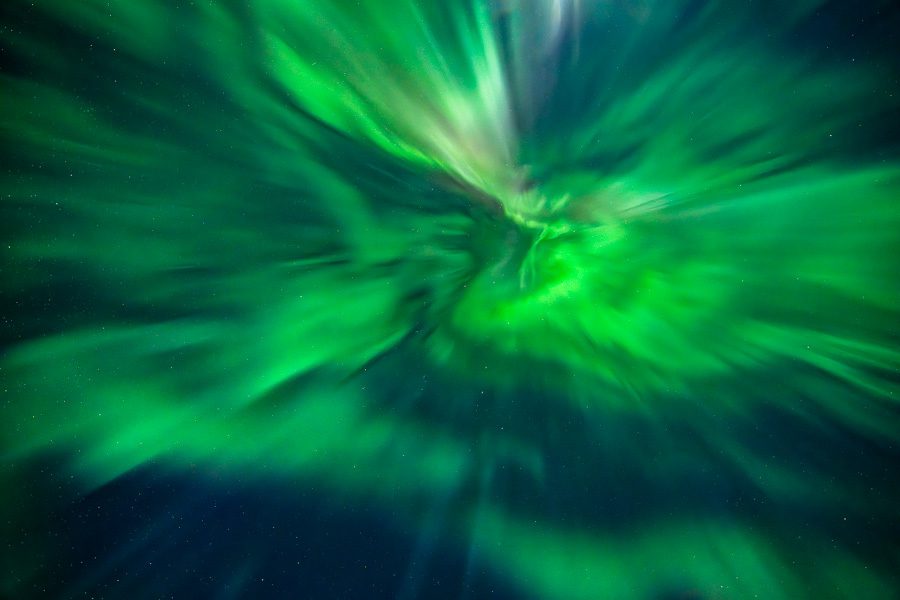
- More dynamic – Instead of a weak green band, you might see shimmering curtains of red, violet, and purple, moving with astonishing speed.
For photographers, it’s the chance of a lifetime to capture the northern lights at heightened activity levels.
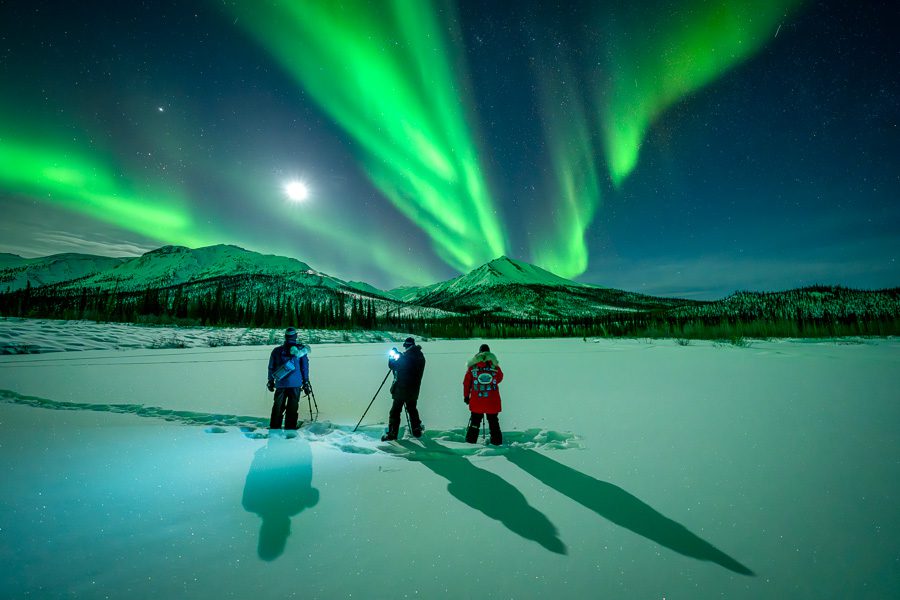
There’s simply nothing like standing under a cold, starlit sky when the first faint glow begins on the horizon. It grows, it sways, it erupts into ribbons and curtains overhead. The aurora isn’t just a sight—it’s an experience. It speaks to you, stirs something deep inside, and transforms the way you see the night sky.
That’s why this year, we’ll be heading out three separate times to Alaska to chase the aurora with our groups. And we can say with certainty: there’s no better way to capture a powerful aurora image than to be there in person, letting it unfold before you, with your camera ready.
What Causes the Aurora?
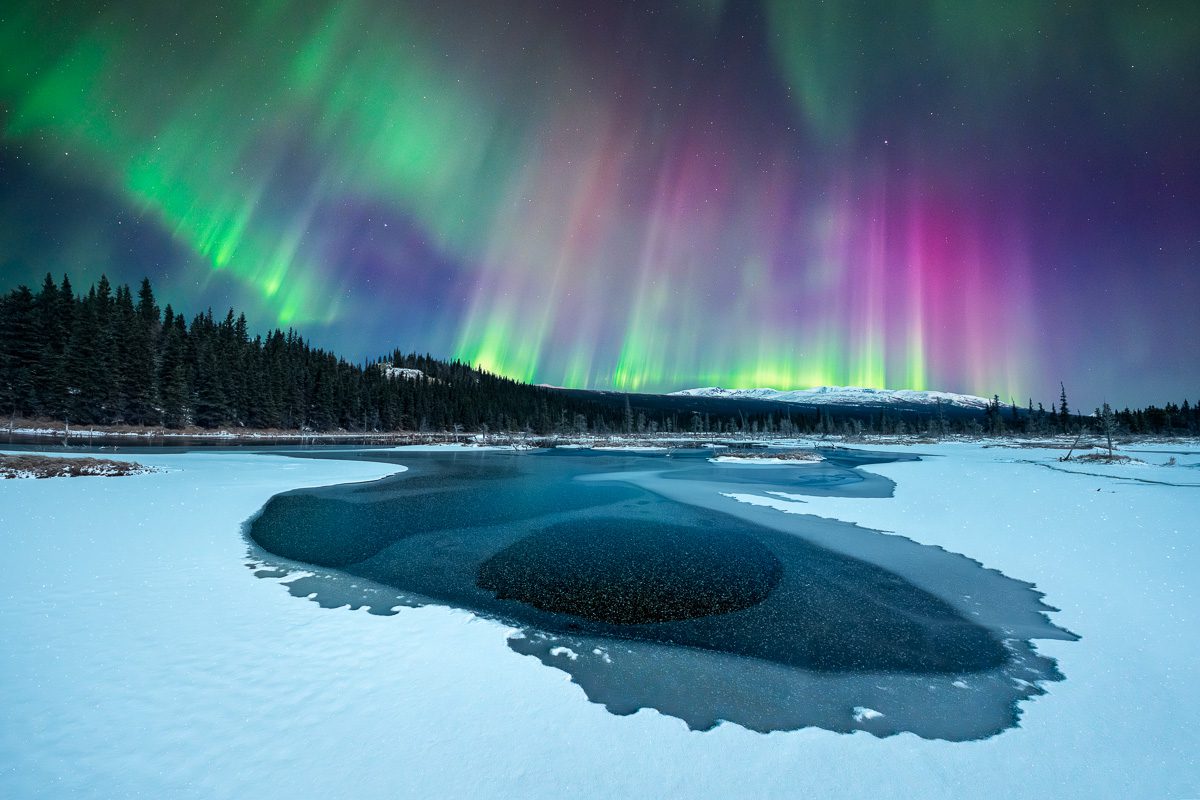
The aurora begins nearly 93 million miles away. The Sun constantly sends out streams of charged particles known as the solar wind. When bursts of this energy collide with Earth’s magnetic field, particles are funneled toward the polar regions where they interact with gases in our atmosphere.
- Oxygen at high altitudes creates red auroras.
- Oxygen at lower altitudes glows the iconic green.
- Nitrogen molecules add rare blues and purples to the dance.
At solar maximum—the most active part of the Sun’s cycle—these displays become more frequent and spectacular. That’s where we are now. And that is why we’ve gone chase crazy!
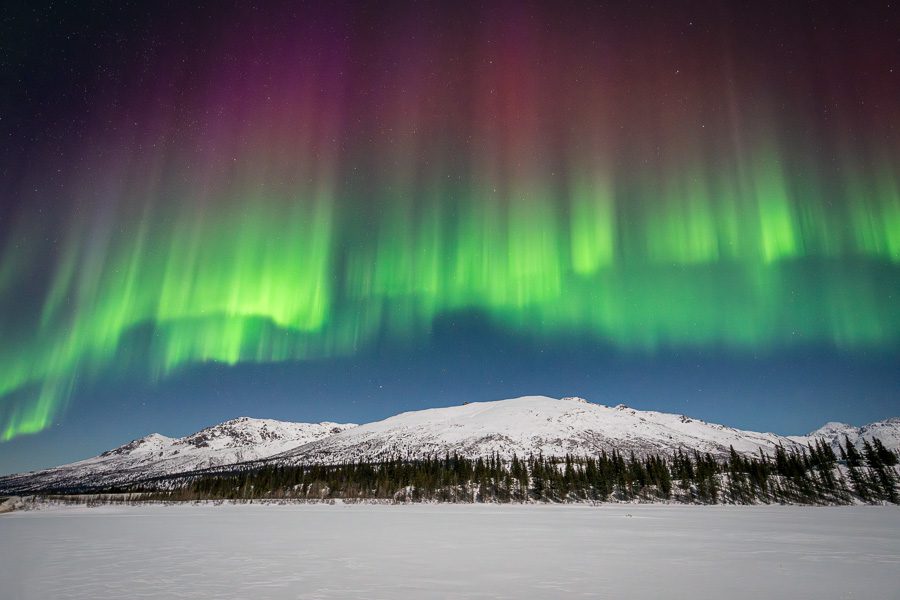
Why Alaska if Our Top Choice for Photographing the Aurora
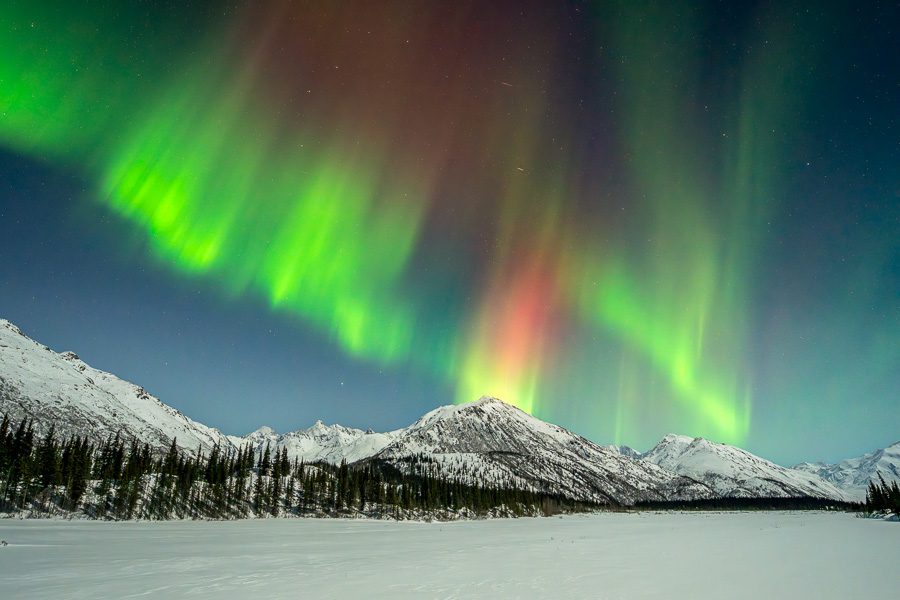
So why do we return to Alaska again and again? Simply put: it gives us the best odds and the most beautiful settings for aurora photography.
- Clear Skies Advantage – Because Alaska’s interior isn’t coastal, it avoids the marine effect that often brings clouds to places like Iceland or Norway. This means a higher likelihood of clear skies, and more nights under the lights.
- Incredible Foregrounds – Great aurora images need more than just sky—they need foregrounds. In Alaska, we’re spoiled for choice:
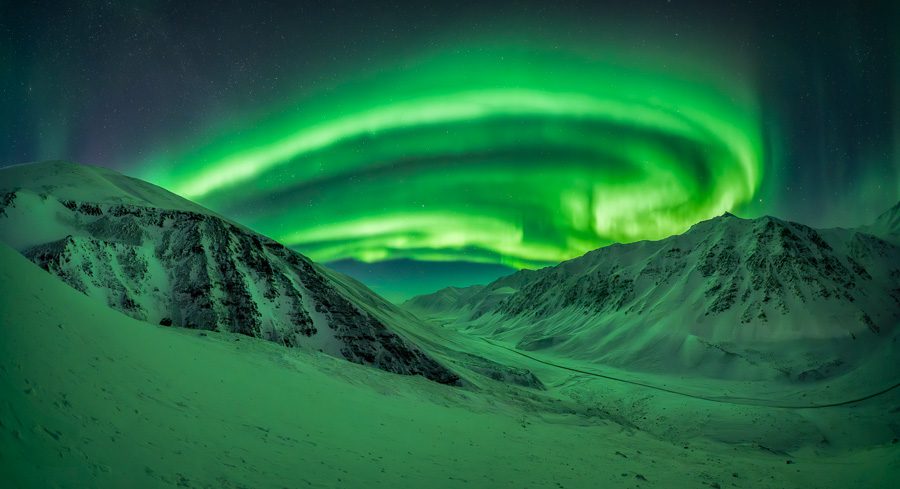
- Snow-covered mountain peaks glowing under the aurora.
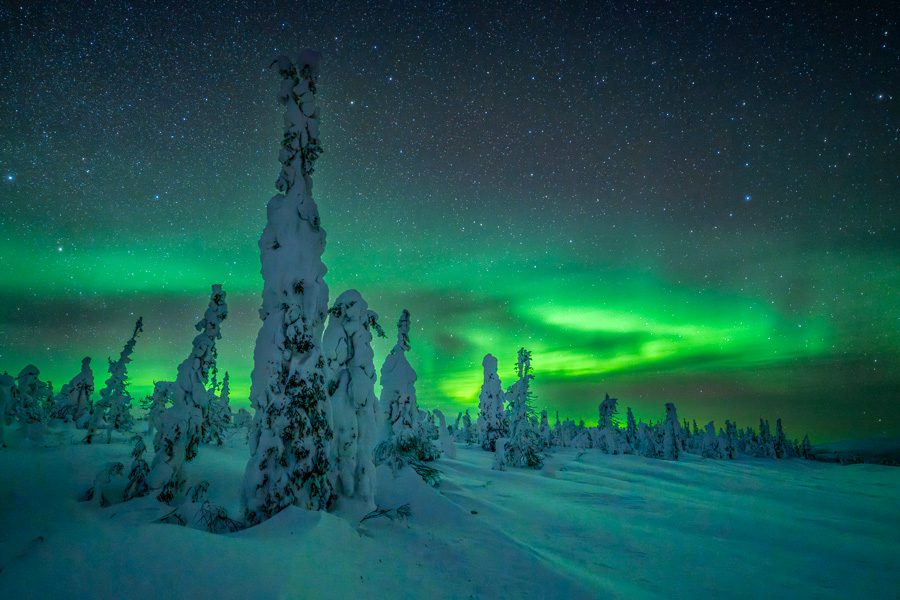
- Trees encased in heavy snow, like natural ice sculptures.
- Reflections on sheets of clear ice.
- Warm, rustic cabins lit beneath the dancing lights.
Together, these conditions make Alaska a dream setting for capturing the aurora in all its glory.
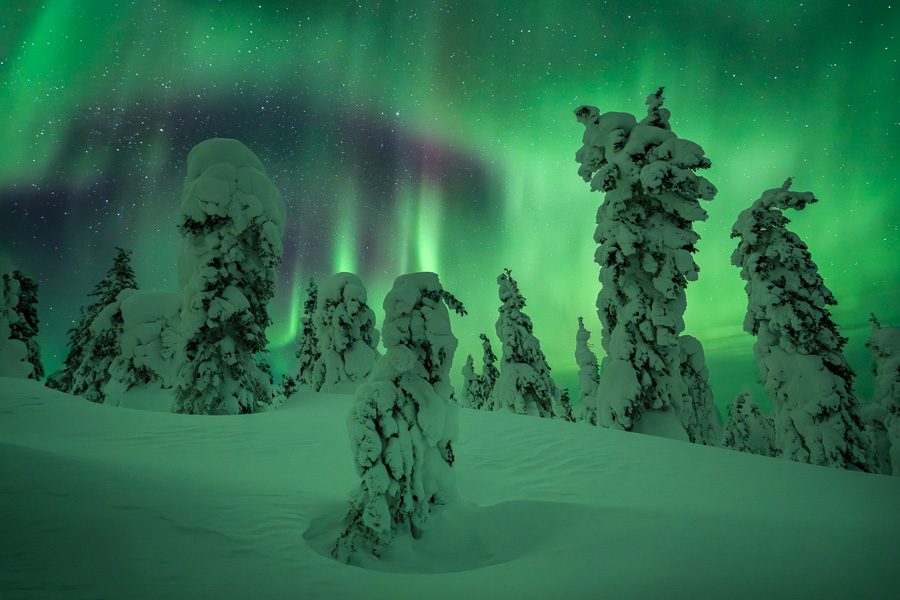
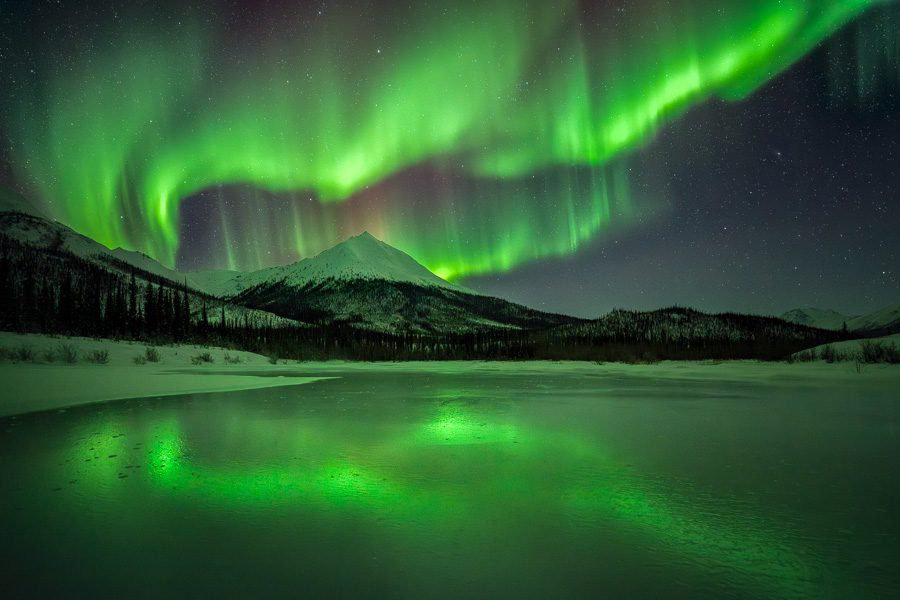
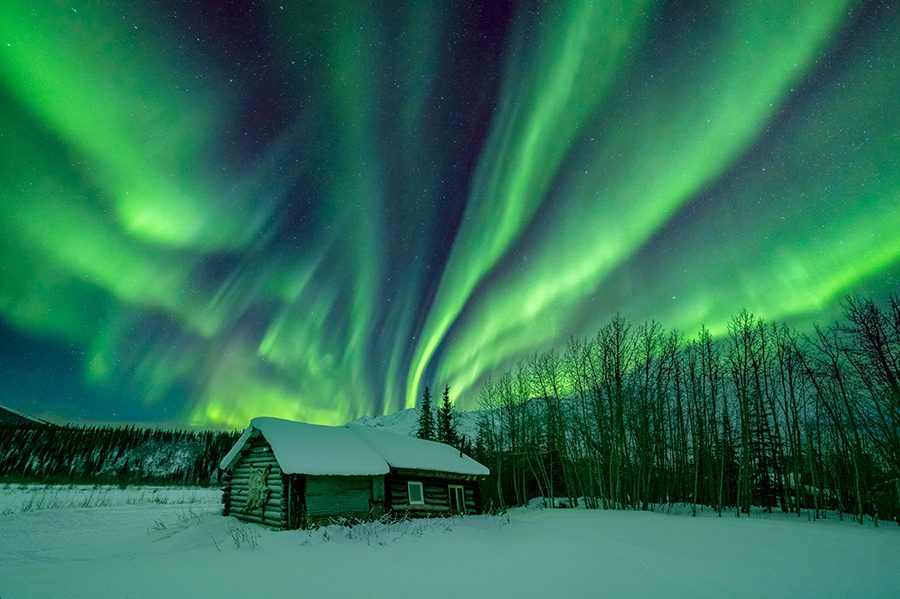
Tips for Photographing the Aurora
Whether you’re joining us in Alaska or heading out on your own, here are some tips for making the most of solar max:
- Scout during the day – Find strong foregrounds (trees, mountains, cabins, rivers) in daylight so you’re ready when the lights appear.
- Tripod + remote = essential – A solid tripod keeps your images sharp, and a remote shutter (or 2-second timer) prevents camera shake.
- Start with these settings – ISO 1600–3200, aperture f/2.8 (or wider if possible), and a 5–15 second exposure. Shorten if the aurora is moving fast; lengthen for faint or slow curtains.
- Focus on infinity – Use live view to zoom in on a star or distant light, focus carefully, and then switch to manual so your lens won’t hunt in the dark.
- Check your histogram – The aurora can fool your LCD preview. A quick glance at the green RGB histogram will tell you if your exposure is too dark or clipping highlights.
- Compose creatively – Don’t just point up. Include landscapes, reflections, people, or even silhouettes to add story and scale to your aurora shots.
- Dress warm & stay patient – The best aurora shows often happen late at night when you’re tempted to pack it in. Stay out a little longer—you never know when the sky will erupt.
For a deeper dive, here’s an informative article David wrote just for you: How to Photograph the Aurora Borealis.
Aurora photography is unlike any other type of photography. It demands patience, practice, and a willingness to brave the cold. But when the lights appear, everything else fades away—you’re caught in a dance between the Earth and the Sun.
This solar max is a rare gift. However you chase it, may the aurora surprise you, move you, and inspire you to press the shutter at just the right moment.