
Composition in Photography—Part 1
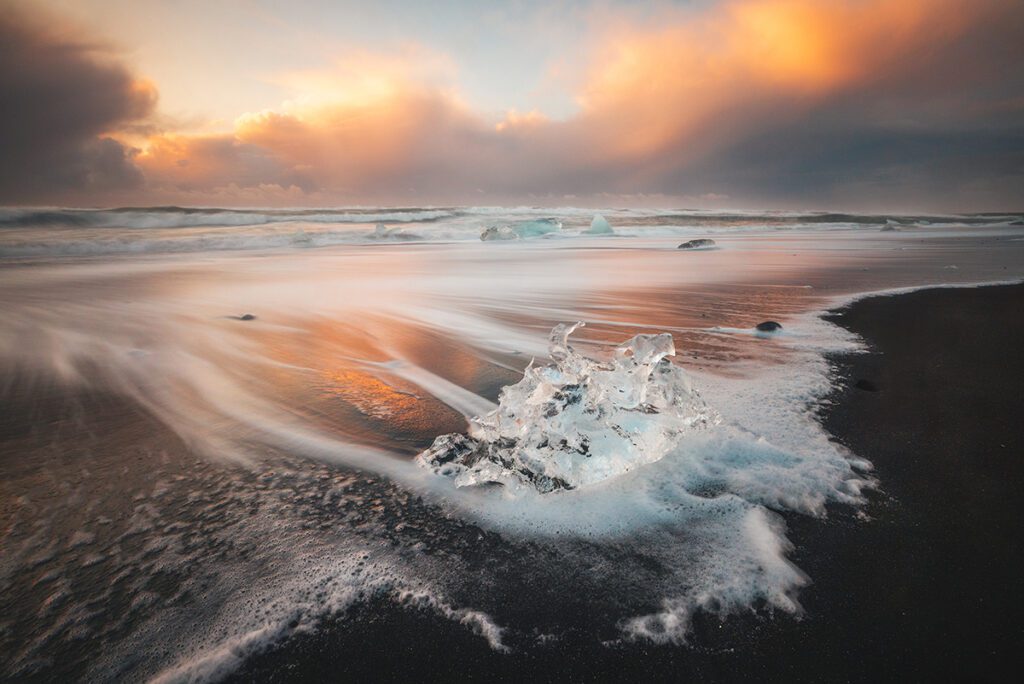
Have you ever been drawn into a photograph without knowing exactly why? Pulled into it, almost instinctively?
Sure, elements such as light, contrast, color, and rare atmospheric conditions add allure. But more often than not, the main draw is composition.
Composition is simply the deliberate arrangement and placement of visual elements within the frame. And the best part? Composition is largely within our control depending on safety, terrain, and whether you can physically move closer or farther away.
If that’s true, shouldn’t it be one of the photographer’s primary responsibilities to develop and refine this skill as much as possible?
The answer is yes.
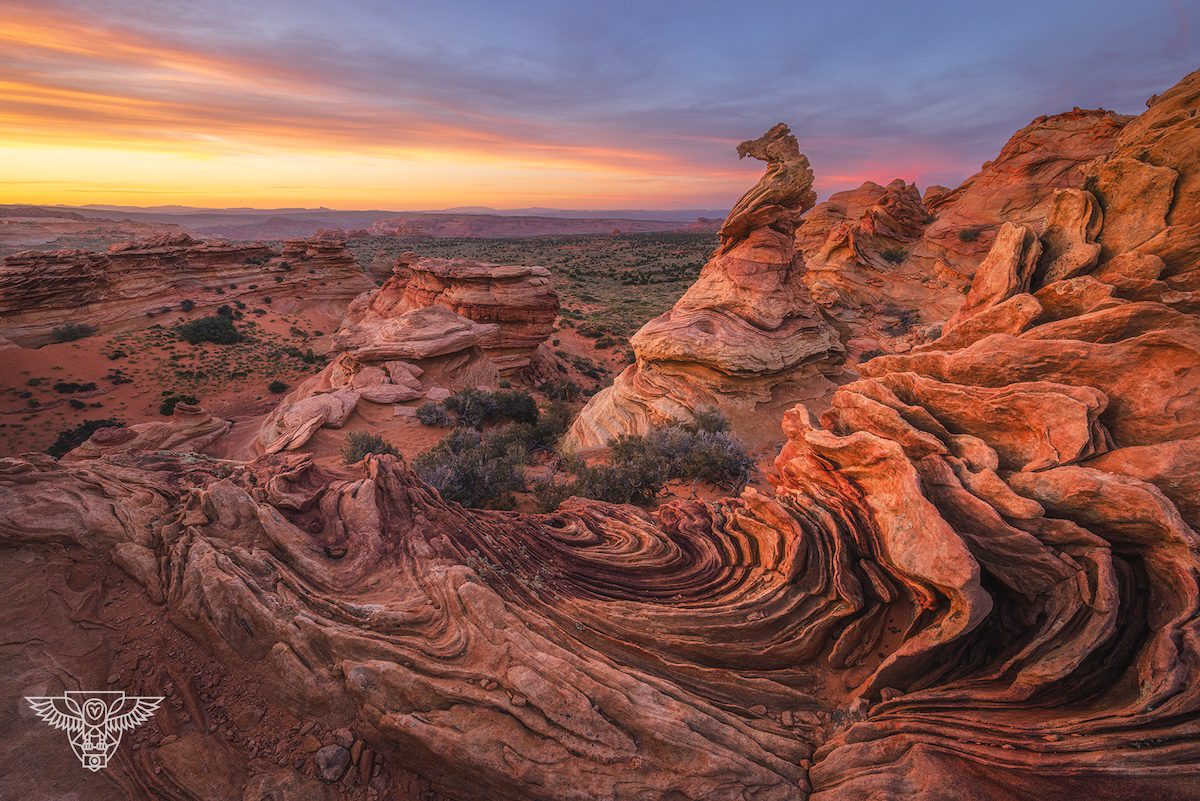
We Control the Composition
We all know what it’s like to wait for great light or ideal conditions. Those things are often completely outside our control.
Composition is different.
Almost any photograph can be improved through better composition, and that’s something we can actively work on every time we pick up a camera. Like any skill, it requires dedication and practice. The more time you spend studying and applying composition, the more naturally you’ll begin to recognize opportunities in the field.
It’s similar to learning a second language. At first, you have to consciously think about every word and phrase. Eventually, through immersion and repetition, you begin thinking in that language. Composition works much the same way.
So how do we get there?
We develop strong compositions through an understanding of compositional elements such as:
- Rule of Thirds
- Leading Lines
- Fibonacci Spiral / The Golden Ratio
- Symmetry and Patterns
- Framing
- Juxtaposition
- Tension and Space
- Dead Center
- Multiple Compositions Within the Frame
You’ve probably heard of most of these before.
Here’s the important distinction: these are often the results of successful composition rather than the starting point. They explain why a photograph works, but they aren’t necessarily how a photograph is conceived.
When I’m in the field, I don’t walk around saying, “I’m going to find a Rule of Thirds composition.” Instead, I try to connect with the scene and understand what draws me to it. The compositional elements often emerge naturally as I translate that feeling into a photograph.
We’ll dive deeper into that idea in Part 2.
Get to Know Your Subject
Before composing a photograph, you need to identify your subject.
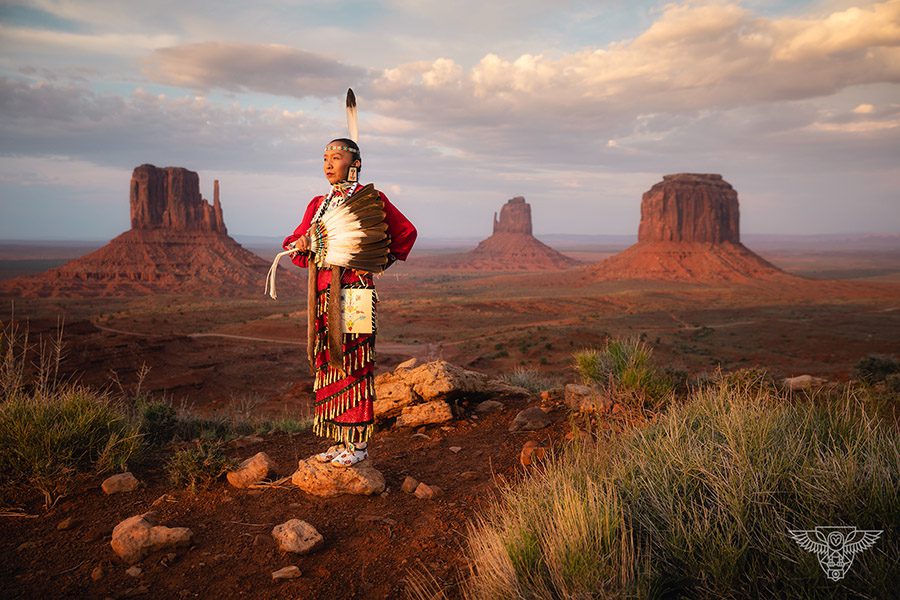
Living in Utah, surrounded by mountains, the subject is often obvious. The mountain peaks themselves become the focal point. In desert landscapes, the subject might be a hoodoo, a rock formation, an interesting pattern, or a simple shape.
As you explore a scene, your composition should evolve around the subject.
In more challenging environments such as forests or seascapes, the subject may be less tangible. It could be light, shadow, depth, atmosphere, color, patterns, or even a fleeting moment of interaction between those elements.
Whatever the subject is, identify it first. Composition becomes much easier when you know what you’re trying to emphasize.
Foreground, Midground, and Background
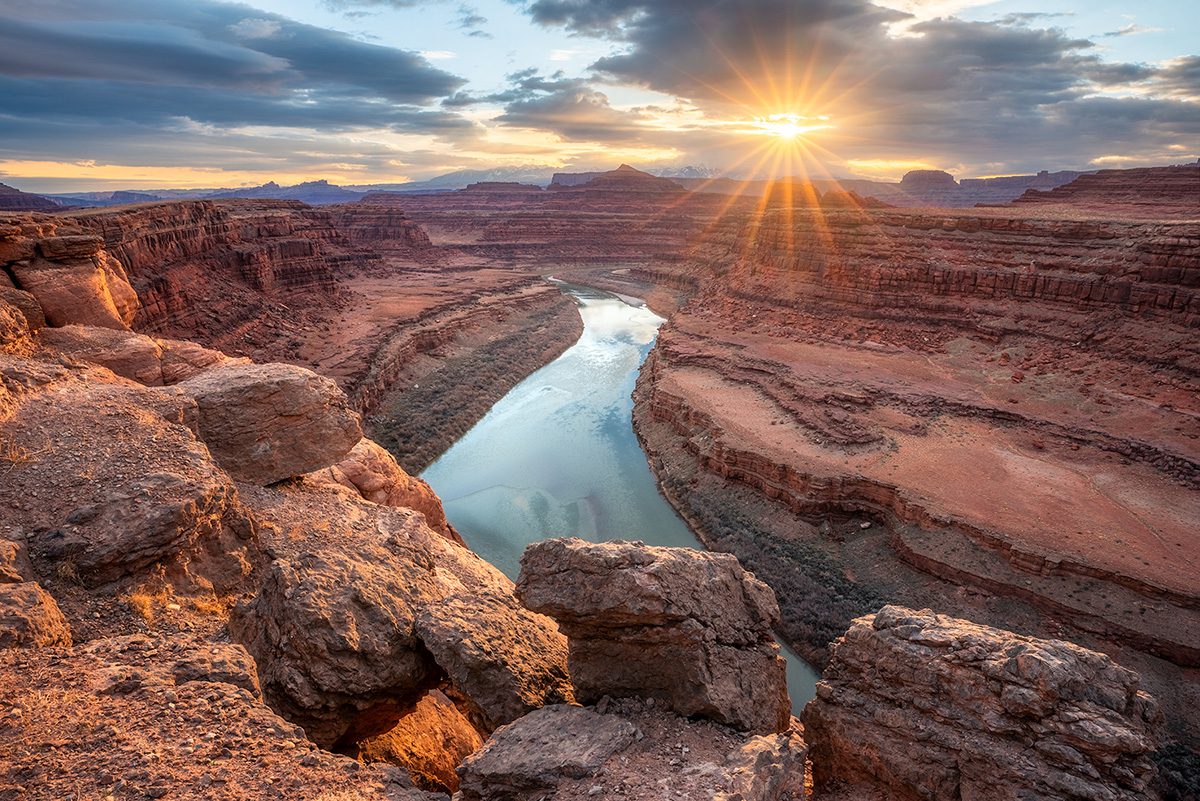
In my early years as a landscape photographer, I struggled to find foregrounds that truly added to a scene. Once I found a compelling foreground, I often struggled with the midground. Sometimes there was too much of it. Sometimes not enough.
Over time, I learned to read all three layers of an image and balance them accordingly.
A strong foreground helps pull the viewer into the photograph. It invites exploration and acts as an anchor, providing balance and visual interest. Capturing an effective foreground often requires a wide-angle lens and a willingness to get close.
The midground is often the least important part of the composition, but it still plays a role. It can provide depth and help connect the foreground to the subject. However, too much empty or uninteresting midground can weaken an otherwise strong image. It stops the eye and interrupts the visual flow.
The background is frequently the subject itself and deserves careful attention. It should remain strong and not be diminished by either the foreground or midground. In telephoto compositions, the background may become the entire story, eliminating the need for a foreground or midground altogether.
So which “ground” is most important?
There isn’t a single answer.
The key is balance. When one layer overpowers the others without purpose, the image often feels out of tune.
The Visual Triangle
Once I have a scene in my viewfinder, I often look for ways to create what I call a visual triangle.
The goal is to guide the viewer through the image and create a sense of movement and discovery. This takes practice and requires learning how to read a scene.
I build these visual triangles using elements such as texture, light, shape, contrast, reflections, framing, and leading lines. When placed thoughtfully within the frame, they create visual tension and interest that encourage the viewer to stay engaged with the photograph.
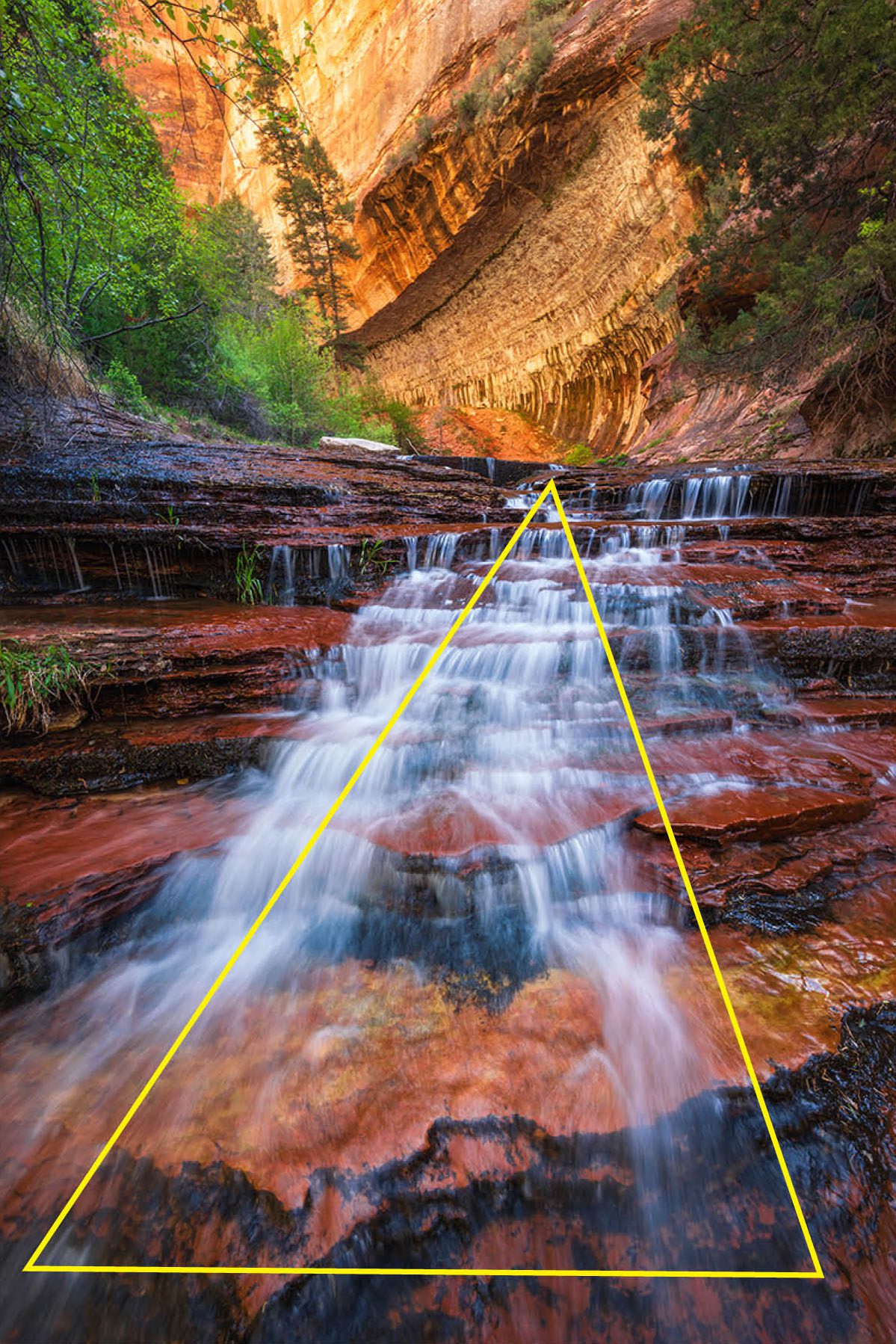
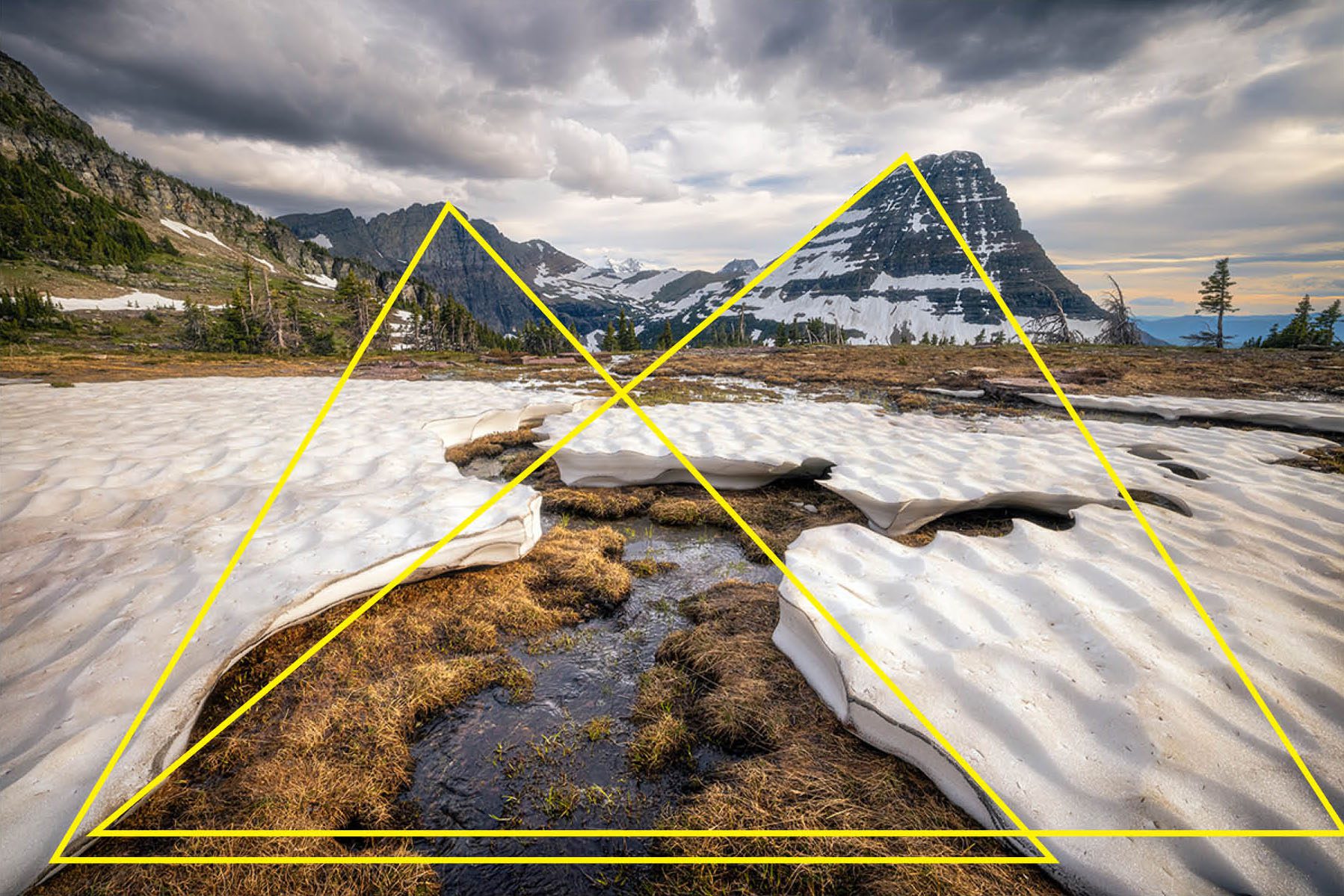
Remember, I rarely jump straight into taking pictures. I spend time observing and feeling out a scene first. (We’ll explore that process in Part 2.)
The compositional elements shown in the examples below are simply the results of that approach.
Elements of Composition
Here are some examples of compositional elements. See if you can recognize and identify the elements at work within each photograph.
Rule of Thirds
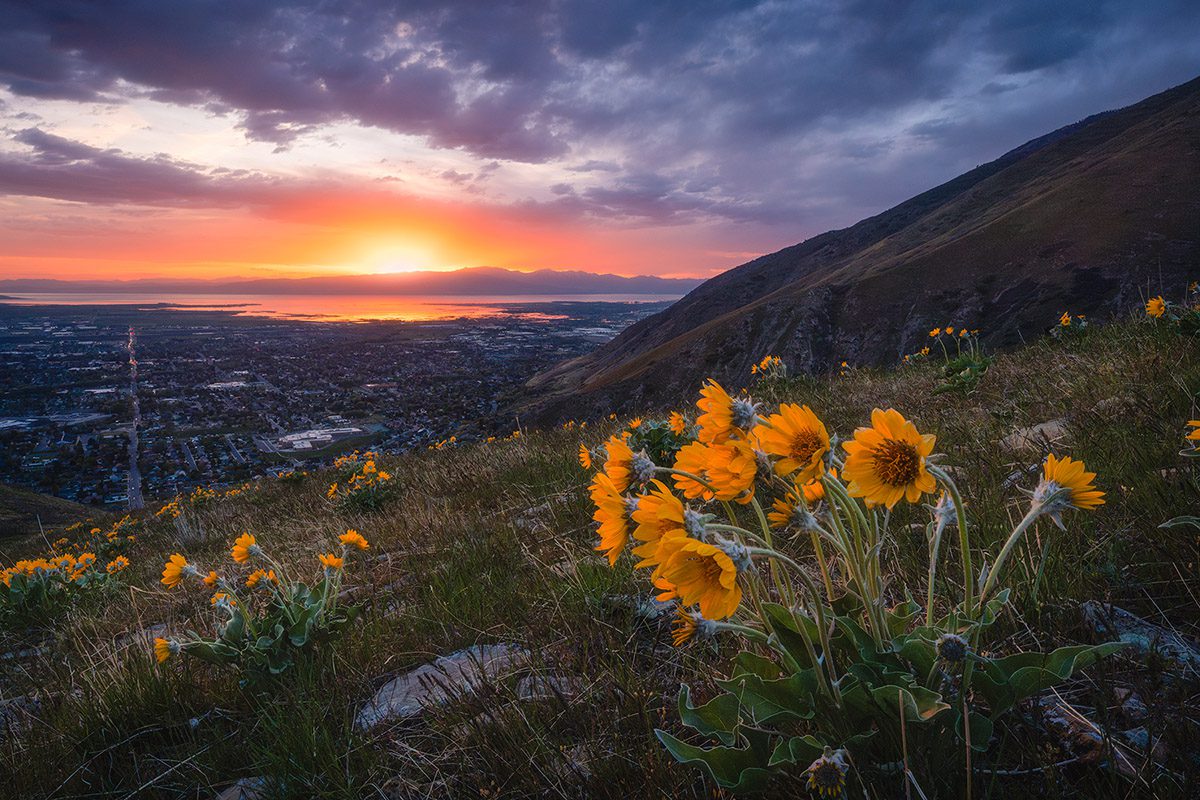
In this example, taken in the high country of Utah, the scene naturally lent itself to a Rule of Thirds composition.
Leading Lines
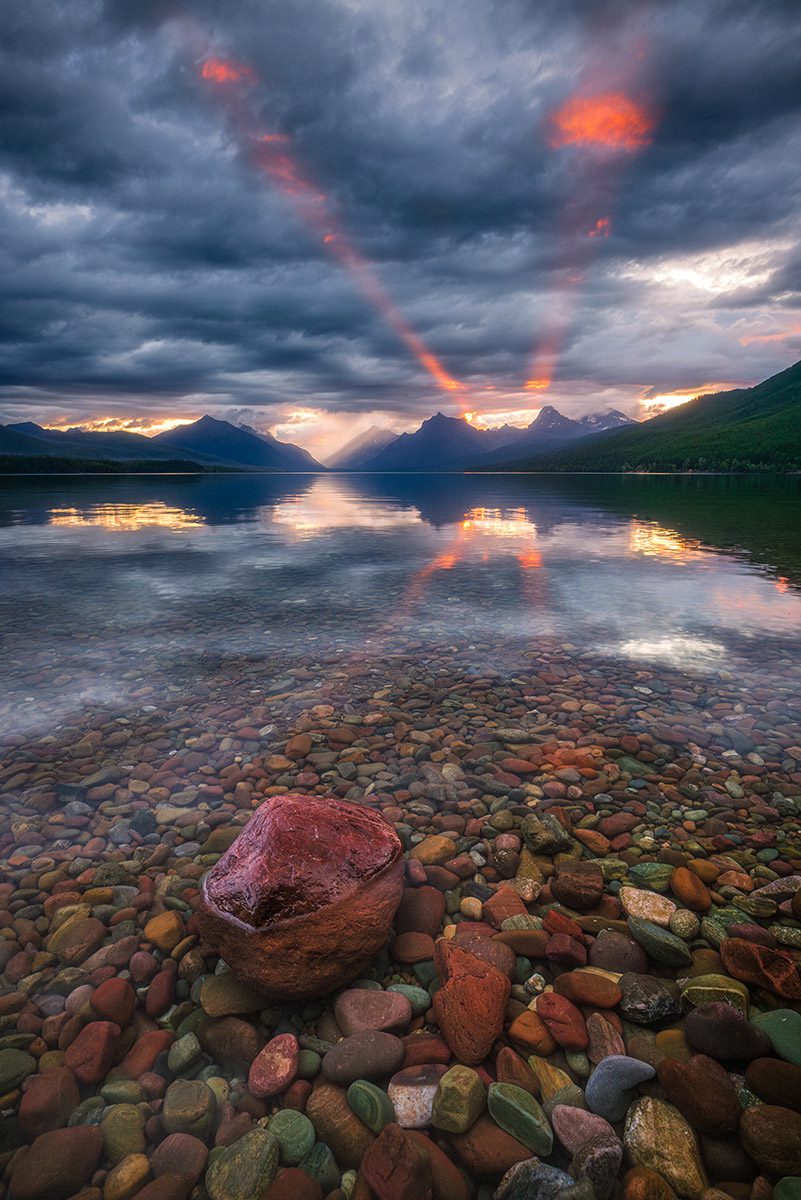
Totally serendipitous and unplanned, how could I not use these fleeting leading lines that appeared for less than two minutes? The lines formed a dramatic “X” that pulled the viewer through the frame.
Fibonacci Spiral / The Golden Ratio
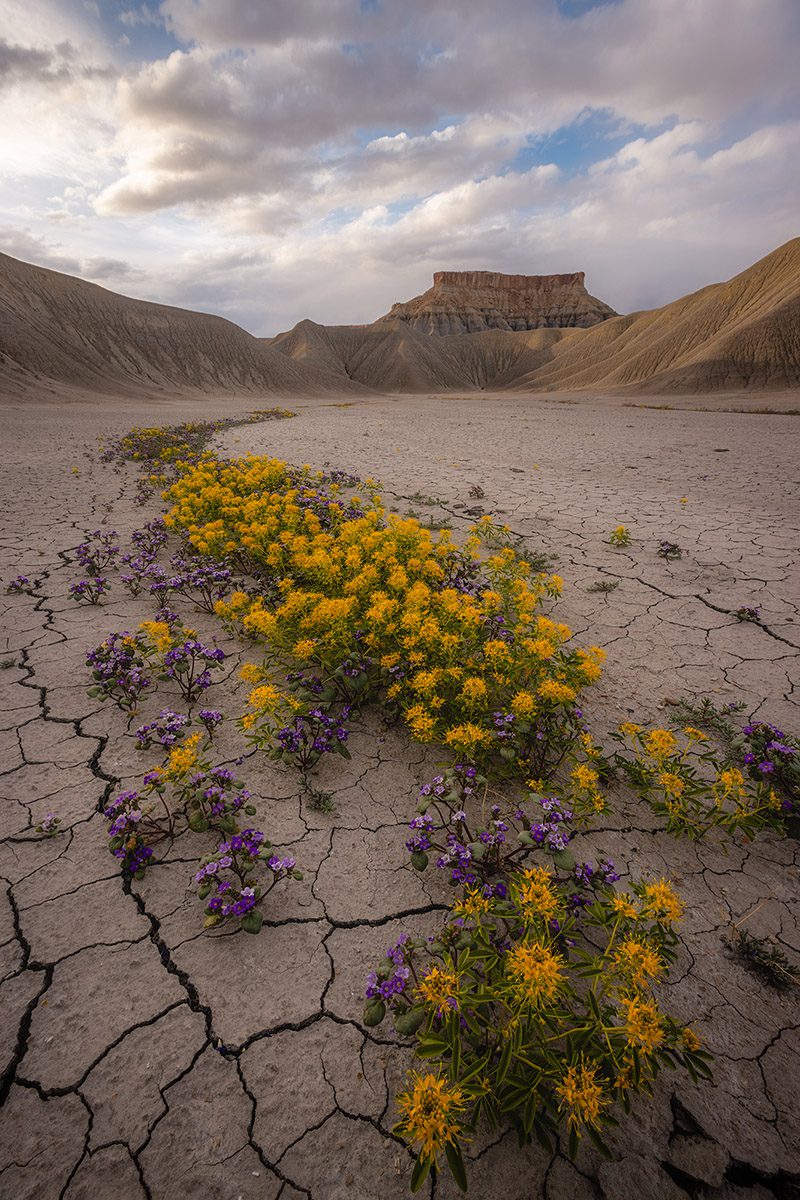
The Fibonacci Spiral begins in the lower-right corner and sweeps through the wildflowers, guiding the eye toward the distant badlands mesa.
Symmetry and Patterns
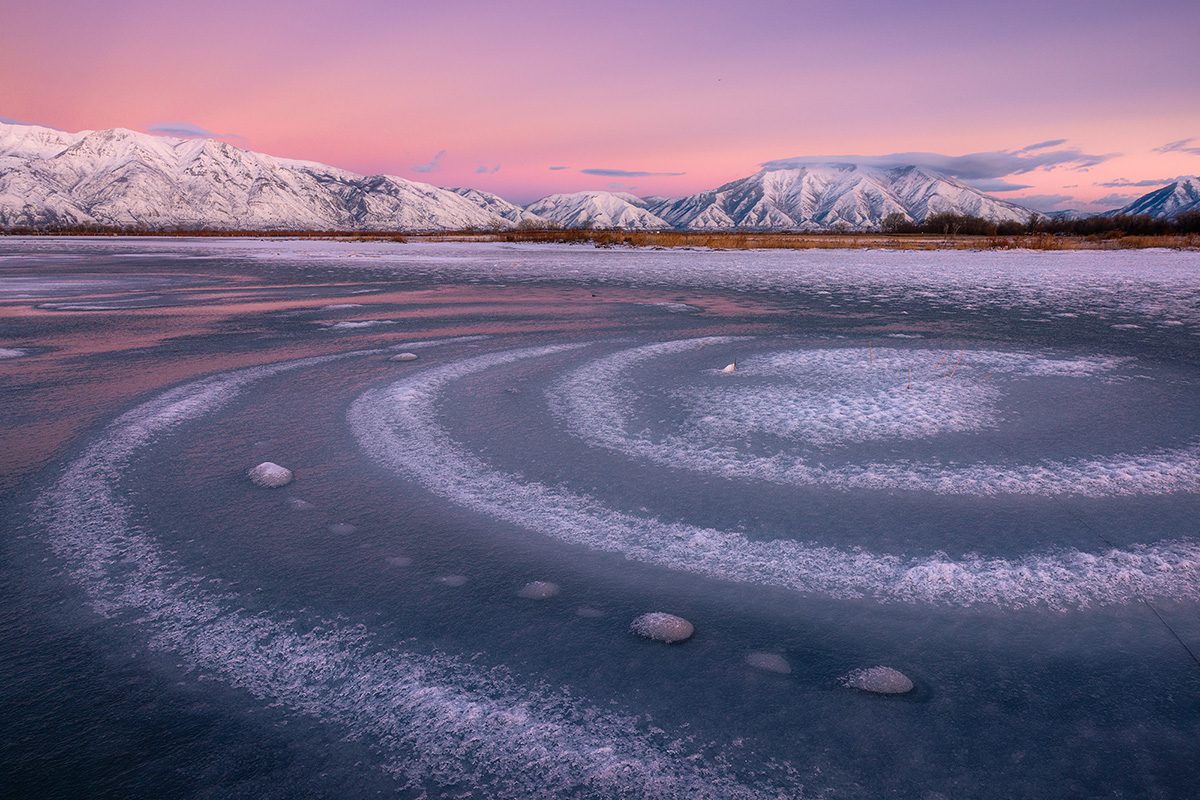
I found these fascinating circular patterns in the ice, formed by strong winter winds. Their near-perfect symmetry immediately caught my attention.
Framing
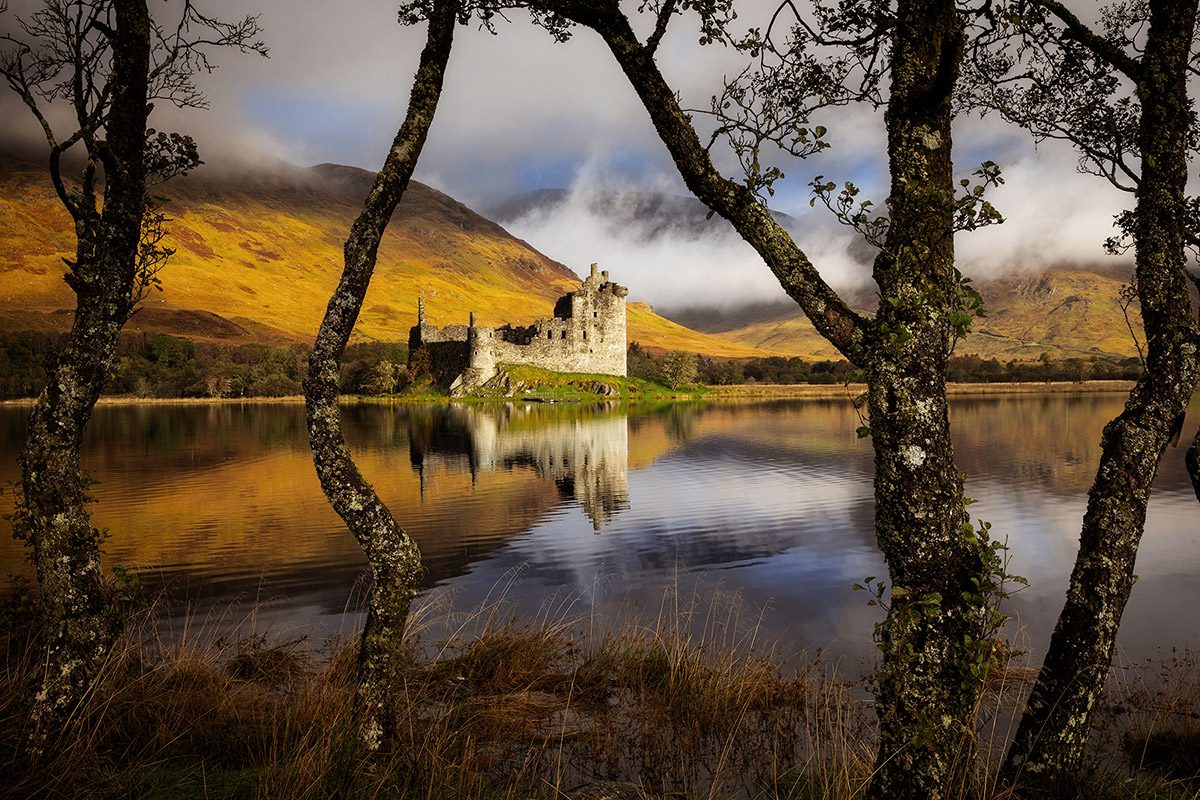
The trees created multiple layers of framing around the Scottish castle, helping keep the viewer’s attention focused on the main subject.
Juxtaposition
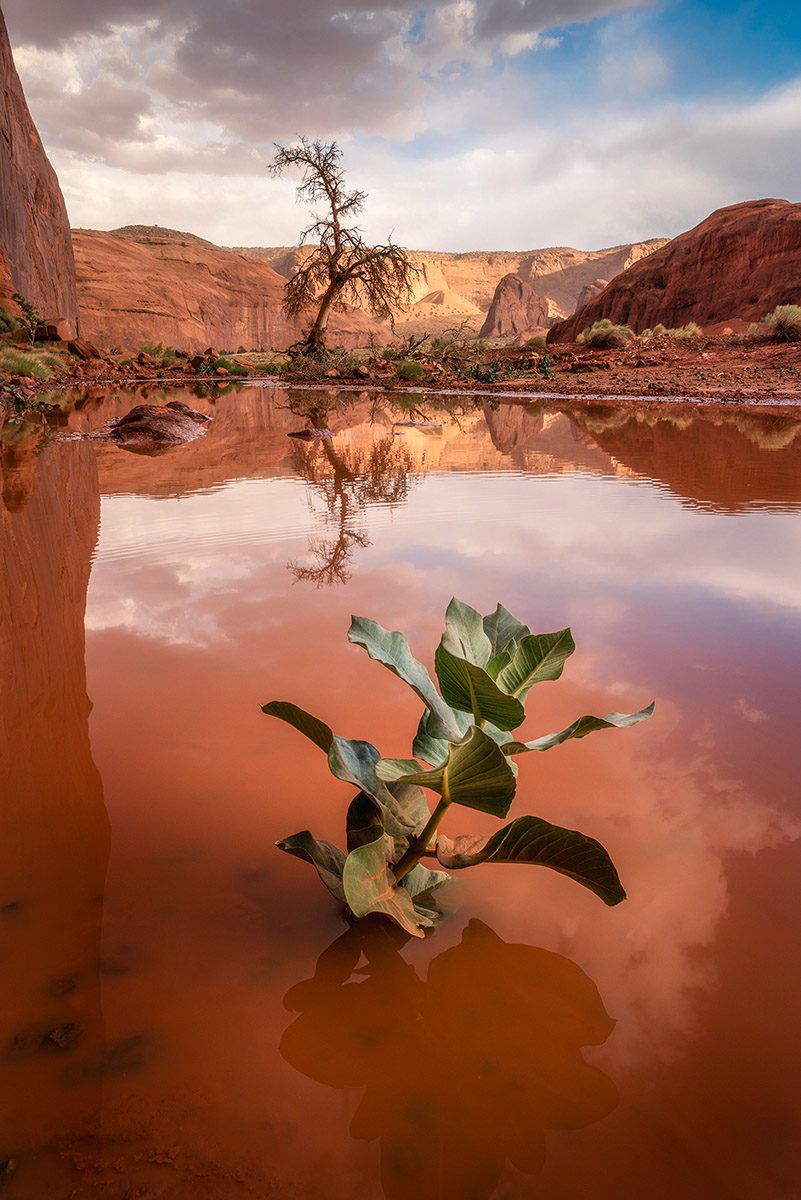
Juxtaposition places contrasting elements together to create visual balance and interest, much like the concept of yin and yang.
Tension and Space
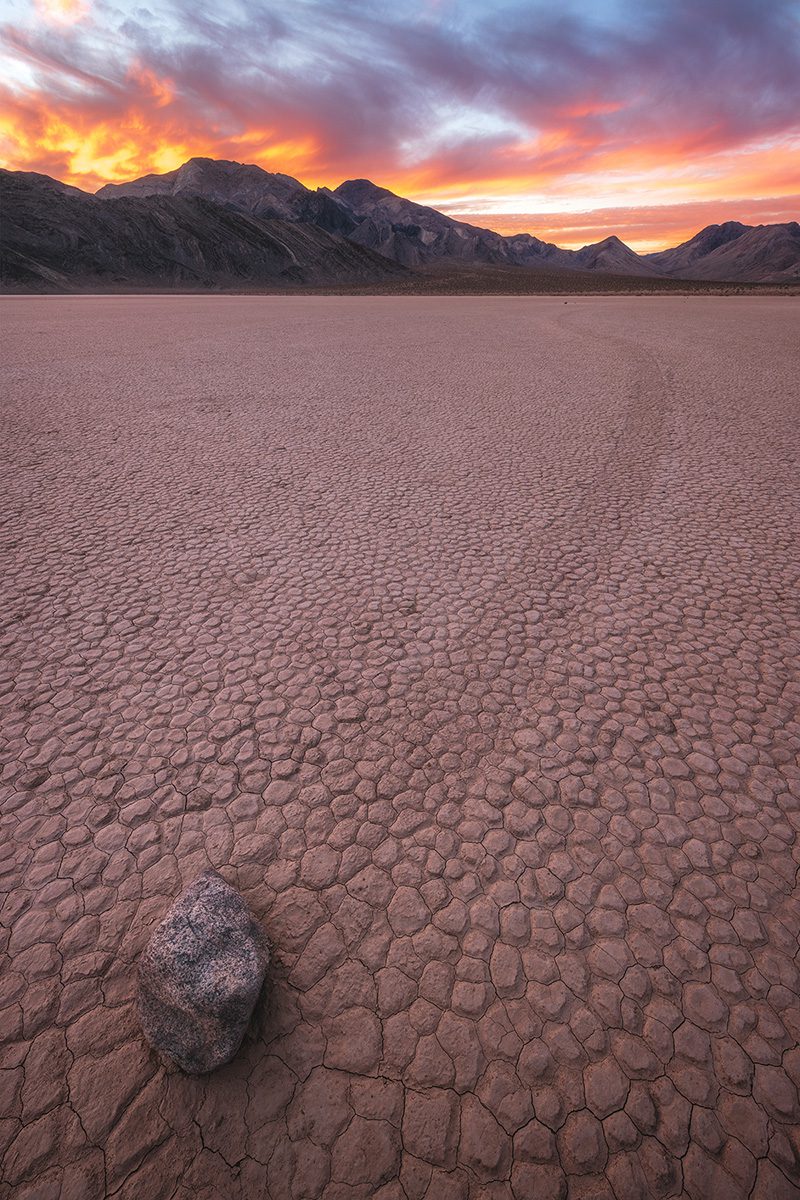
Placing this racing rock in the extreme lower-left corner of the vast space creates tension, implying that it is about to move out of the frame.
Dead Center
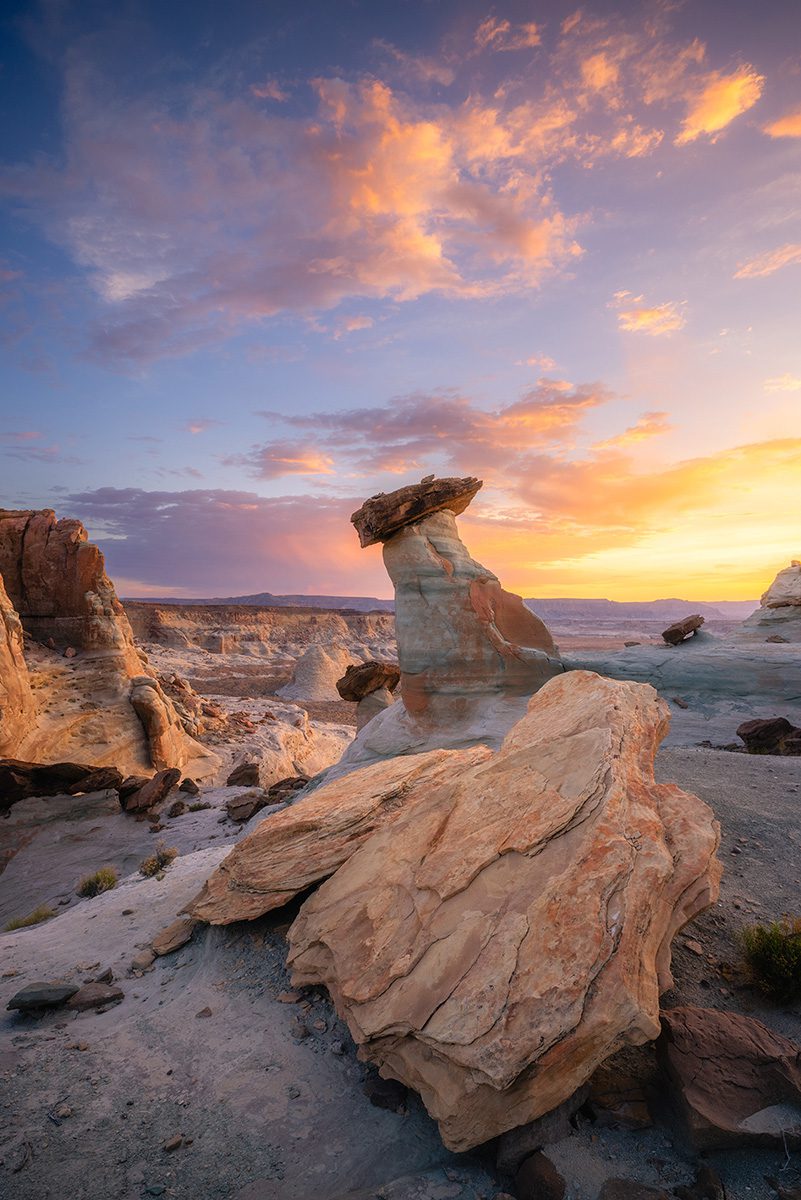
By placing the hoodoo directly in the center of the frame, it becomes a strong visual anchor for the rest of the composition.
Multiple Compositions Within the Frame
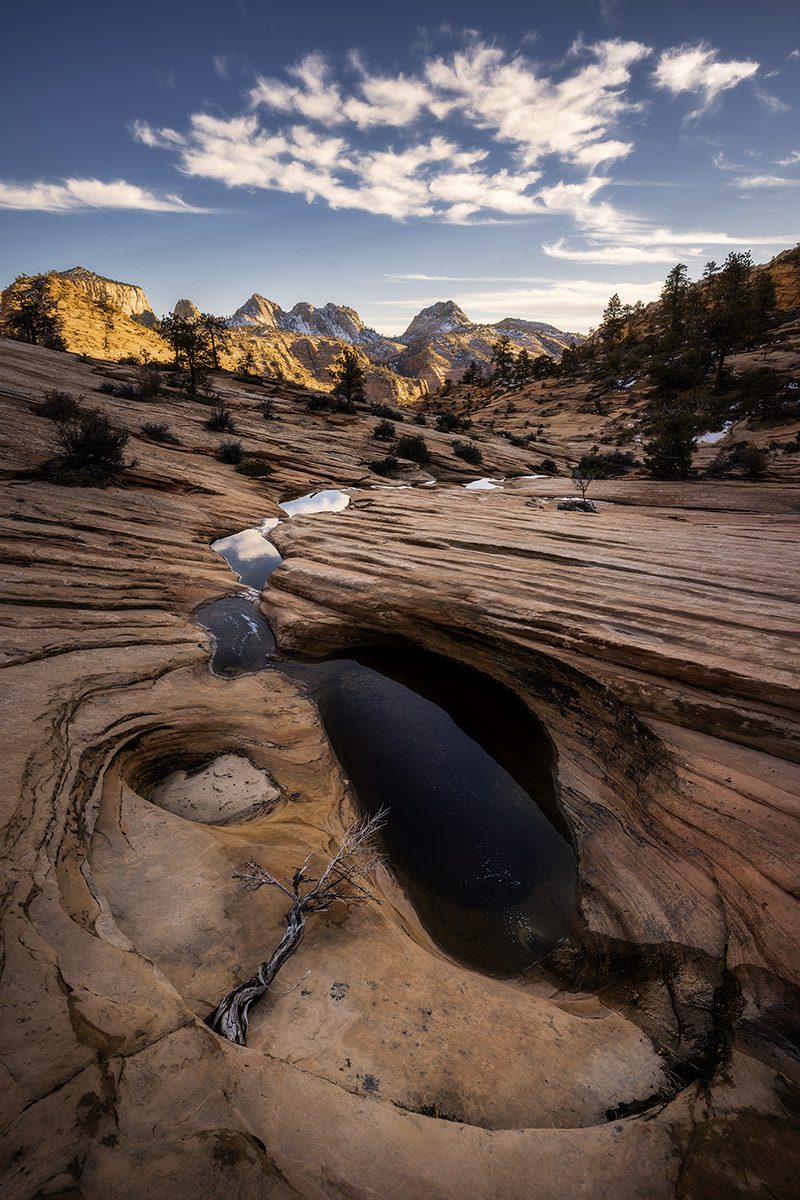
Every once in a while, you’ll find a scene that can be photographed in many different ways. Here, the foreground functions as a compelling composition on its own while still tying seamlessly into the larger vista beyond.
Remember
Compositional elements are the mechanical and technical tools available to every photographer. In skilled hands, they can create photographs that resonate deeply with viewers.
There is no universal recipe for great composition. It is a skill developed through practice, observation, and persistence.
As photographers become more comfortable with these tools, they gain the freedom to move beyond technique and allow their artistic voice to emerge.
Stay tuned for Part 2 of Composition in Photography, where we’ll discuss what I call “shooting through feel.”
Learn more about author A.J. Rich.